Can remote work build lasting Careers in Africa?

A young graduate joins a funded employment program, works with a company for several months and gains valuable experience. Then the program ends. What happens next?
That question deserves as much attention as recruitment and training. For foundations investing in youth employment across Africa, the goal is rarely to fill a temporary placement. It is to help people build careers that continue after the funding period.
Remote work can expand the possibilities. A professional in Kenya, Madagascar or Senegal can contribute to a company based elsewhere without leaving home. But access to an international employer is only the first step. The experience must help both the young professional and the company build a working relationship that can last.
Start with real work
Employment programs often begin by asking what skills young people need to learn. That matters, but employers should also be involved at the design stage. What work needs doing? What support can a manager provide? What would make the experience valuable enough for the company to consider hiring the participant afterward?
A placement built around real responsibilities gives a young professional something more useful than a certificate. They can show what they produced, explain the decisions they made and describe how they worked with a team.
This does not mean expecting someone at the start of their career to perform without guidance. Clear tasks, regular feedback and a manager who has time to supervise are essential. A remote placement needs these elements to be planned deliberately; they are less likely to happen through casual conversations in an office.
Make remote participation workable
The promise of cross-border work is compelling: professional opportunities can reach people who cannot relocate. Yet a remote placement has practical demands. Participants need suitable equipment, reliable ways to communicate and clarity about working hours. Employers need an onboarding process, a point of contact and a way to resolve problems quickly.
Programs operating in several countries must also deal with different rules and payment arrangements. A single recruitment campaign may look simple from a central office while requiring distinct local processes for contracts, stipends, payroll or compliance.
These details influence whether participants can focus on their work and whether employers will offer another opportunity. Talenteum examines this operational side in its article, From Funding to Impact: Implementing Programs in Africa, including the role of employer engagement and local infrastructure.
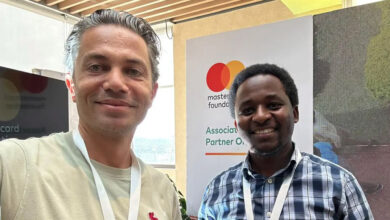
The Mastercard Foundation Associates Program offers a practical example. Through 12-month professional placements, it gives young African professionals the chance to gain experience with employers. Talenteum serves as an implementing and placement partner, helping engage employers and coordinate remote opportunities. The program also raises the question at the heart of this article: how can that first experience lead to lasting paid work?
Give participants proof of what they can do
At the end of a remote placement, a participant should be able to answer a straightforward question: What can I now show a future employer?
The answer might include a project they completed, a portfolio item, a supervisor’s assessment or a clear account of the responsibilities they handled. For some roles, work cannot be shared publicly. In that case, a description approved by the employer can still help the participant explain their contribution.
This evidence matters because early-career candidates often face the same obstacle: employers ask for experience that they have not yet had the chance to gain. A well-run placement can change that. It gives the participant examples to discuss in an interview and gives the host employer a basis for judging their progress.
Mentoring can strengthen the experience, particularly when it helps someone understand workplace expectations and plan a next step. It works best alongside meaningful work, rather than as a substitute for it.
Measure what happens after the placement
Programs often report how many people enrolled, completed training or started a placement. Those numbers show activity, but they cannot tell the full story of a career transition.
Funders and implementing partners can ask further questions: Did participants complete their assignments? Did they gain skills they can demonstrate? Would the host employers work with them again? How many secured paid work afterward, and what kind of work was it?
The answers may take time to collect. An immediate job offer is one possible outcome, but it is not the only meaningful one. A participant may continue as a freelancer, join another employer or use their new experience to compete for a role that was previously out of reach. Following up after the placement helps distinguish an encouraging start from a lasting result.
Design for the next opportunity
A remote employment program cannot guarantee a job for every participant. It can, however, improve the conditions for one. That means bringing employers in early, preparing participants for the work they will actually do, supporting both sides during the placement and documenting what participants achieve.
For African professionals, remote work offers a way to build international experience while remaining connected to their communities. For employers, it offers access to talent beyond their immediate location. For foundations, it creates an opportunity to invest in a bridge between learning and sustained employment.
The measure of that bridge is what happens when the funded period ends. If a participant leaves with stronger skills, evidence of their work and a credible path to another paid opportunity, the program has done more than provide a placement. It has helped a career begin.