
Providing Employment Opportunities to Refugees through Remote Work
Why refugee inclusion in hiring is highly recommended
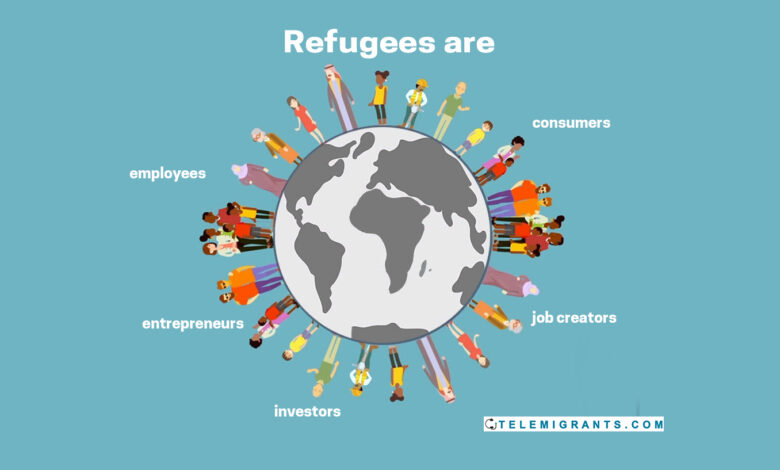
The United Nations High Commissioner for Refugees (UNHCR) defined a refugee as someone who has been forced to flee his or her country because of persecution, war or violence. It further states that a refugee is anyone who has a well-founded fear of persecution for reasons of race, religion, nationality, political opinion or membership in a particular social group. Therefore, refugees hardly want to return home or are afraid to do so.
Refugees across the globe are the most vulnerable set of people that are easily excluded from employment opportunities for several reasons including legal issues. This has resulted in massive unemployment among refugees as they struggle to survive in their host countries.
A report by an Iraqi journal highlighted that refugees were twice as likely to be unemployed. Lack of language skills contributes mostly as the barrier many refugees face in securing jobs as well as lack of employability skills. The results indicate that immigrants are more successful than refugees in securing a job, even after taking their pre-migration and professional experiences into consideration. The report suggested that more attention is needed to help minimize the barriers that refugees face in the employment process.
On the other hand, the issue of refugee unemployment has been identified as being caused by the problem of limited employment opportunities in such host countries, not just by individual circumstance, but by legal and structural barriers. Equally, some experts believe that the refugee unemployment challenge is basically a problem of marginalization which has remained a stigma for the refugee community.
CAN REMOTE WORK BE A WAY OUT?
The economies or benefits of the fourth industrial revolution are enormous. One of such is the digital economy characterized by things like remote works or teleworking opportunities, gigs, micro-working platforms, freelancing platforms, etc..
All these opportunities have created a global talent pool that disregards the location of people and citizenship status of individuals with basic consideration on skills and availability. This truly offers a great means to support refugees who are struggling to secure decent work across the globe.
For instance, since the COVID19 pandemic, remote work has been confirmed as a productive employment model as companies and hiring managers leveraged work from work options to manage their human resources. Also as hiring managers realize that they no longer need to rely solely on talent in their physical locations to fill open opportunities.
The result therefore has been encouraging that today more organizations that were resistant to remote hiring are now considering this hiring model and more young people are getting more comfortable choosing the remote work option. Therefore, this paradigm shift in mentality among players presents a huge opportunity to provide a means of livelihood for refugees across the globe.
Most importantly, refugee inclusive hiring has the potential of helping to address the problem of talent shortage in Europe and America. According to a recent report, in the United States, most employers (69%) encounter difficulties when looking for skilled workers in IT, sales and marketing positions which are the most difficult sectors to fill. The same is also happening in Europe where 87% of executives have or anticipate a skills gap in their workforce.
This talent gap therefore can provide opportunities for refugees, who are largely excluded from the global talent pool. With remote work and teleworking opportunities, refugees can get a seat at the table of the global employment pool.
WHAT NEEDS TO BE DONE
Today, it’s common knowledge that remote work can open doors to employment opportunities beyond borders. Yet there seems to be a challenge of legal restrictions surrounding the right to work for refugees across the globe. With more and more people fleeing from their countries to neighboring countries, host countries are having tough times managing the new realities and are thus enacting strict laws making it difficult for refugees to freely access the same opportunities as their citizens. This presents an opportunity to deepen the crusade of remote work opportunities for such refugees while agencies like the UNHCR, will continue their good work of sensitizing countries and government on relaxation of such tight laws discriminating against refugees.
For instance, according to a report by World Economic Forum credited to Lorraine Charles, Co-founder & Executive Director of Na’amal, highlighted that, in Lebanon, Syrian refugees are restricted to work, while Palestine refugees are only allowed to legally work in the United Nations Relief and Works Agency for Palestine Refugees in the Near East (UNRWA) camps. They are also restricted from participating in certain professions.
Equally, according to the report, Syrians are only permitted to work in specified sectors in Jordan. And in Turkey there are no sectoral restrictions though employers can only hire one Syrian for every 10 Turks employed. In Europe, refugees are allowed to work at varying periods by country, ranging from being allowed to work almost immediately in Greece and Sweden to much longer in other countries, such as the UK and France. This delay as she concludes results in many refugees resorting to informal and other precarious employment.
Therefore, the crusade of remote work as an alternative means of livelihood rather than being subjected to these ill-treatments should be supported by relevant agencies. Platforms like Na’amal and Telemigrants should be encouraged to continue their advocacy as well as job placement activities they are currently doing for the refugee community.
Conclusively, it’s recommended that hiring managers across the globe should put a certain percentage consideration in hiring refugees as part of the global recruitment inclusion. This is not just an altruistic appeal but an intentional decision expected by hiring managers to continue hiring skilled refugee talents across the globe.
My name is Faith Nwaobia (Dr), a social analyst and social entrepreneur leading Youthup Global and Co-Editor of Telemigrants. I write often on LinkedIn
.